
About Western Skies
Building Australian White genetics in the American West.
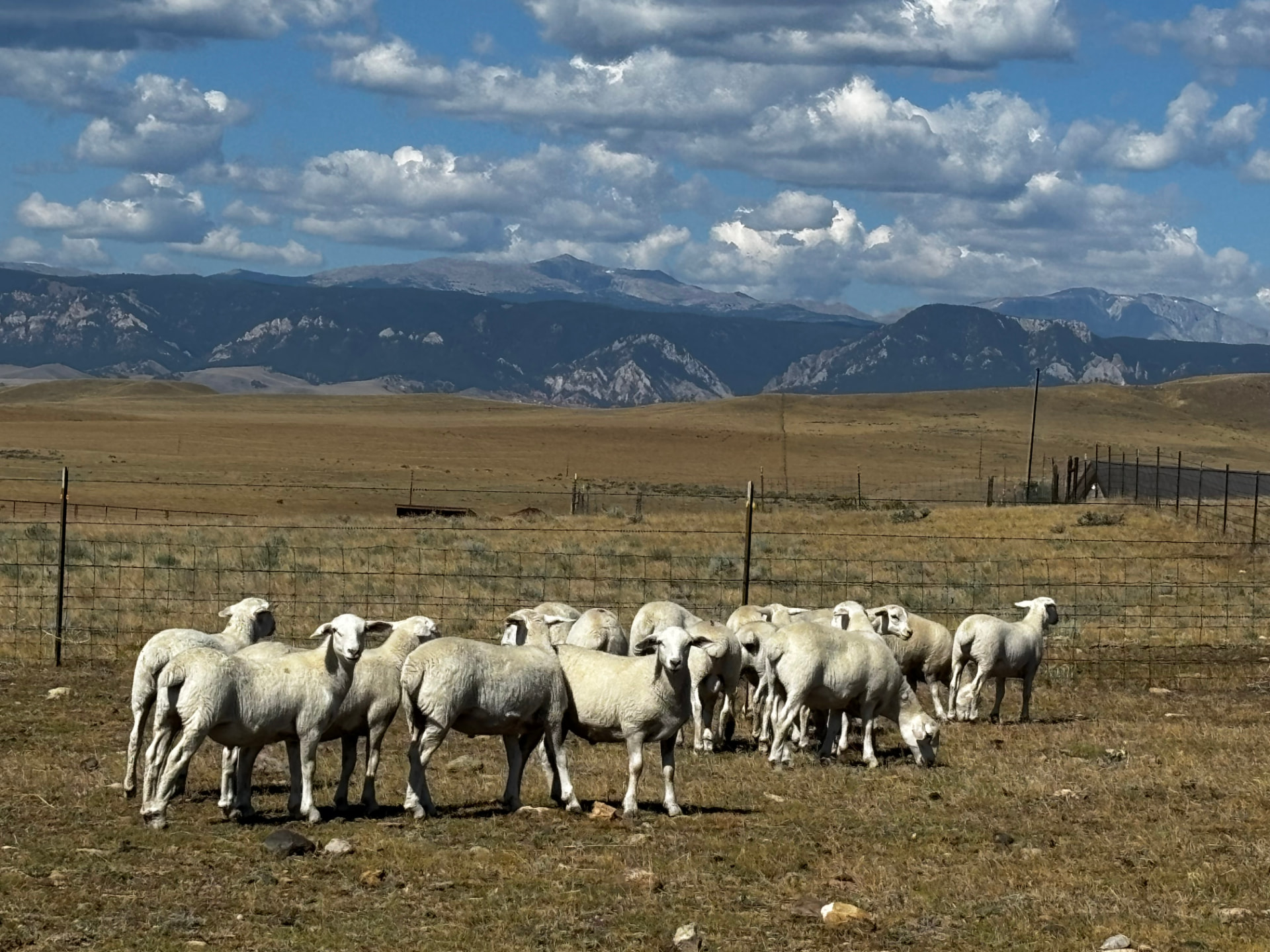
Sheep are developed on native and improved forage in a semi-arid environment, where only practical, productive animals earn a place in the flock.
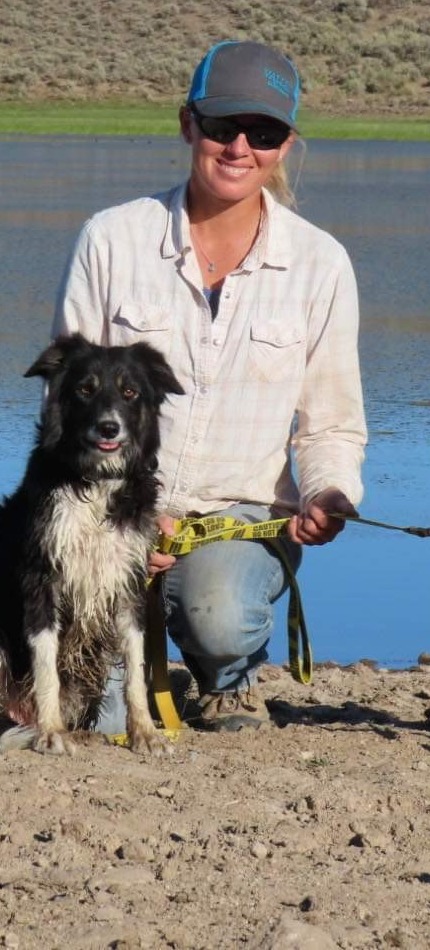
Welcome to Western Skies Australian Whites LLC. I’m Krista Purdum, and this program brings together many years of experience raising livestock, managing rangelands, and selecting animals that can perform in practical, real-world production systems.
Agriculture and livestock have been a major part of my life for many years, and Western Skies is really a continuation of everything I’ve learned along the way. My approach to raising sheep has been shaped by years of working with livestock, building a cattle ranch from the ground up, studying rangelands and soils, and learning firsthand what makes an animal profitable—or costly—in a real-world production system.
One of the most valuable parts of that experience was developing a cow herd over approximately 15 years. The operation was primarily grass-based, although I have also owned a cattle feedlot and finished cattle both on grass and with non-GMO grains.
Building an operation from the ground up taught me to look at livestock differently. Every decision has a cost—in feed, labor, time, infrastructure, or lost production—and an animal has to contribute enough to justify those inputs.
My professional and educational background has centered around agriculture and natural resources for most of my life. In fact, my first job at age 16 was working at a university grasslands research station, helping with grassland studies. That early experience sparked an interest in understanding how plants, soils, grazing animals, and management all interact—a theme that has followed me throughout my education, career, and livestock operations.
I went on to earn a bachelor's degree in Rangeland Management with a minor in Soil Science and have worked professionally in wildlife, rangeland management, invasive species, conservation, and many aspects of agriculture. I have also been deeply involved in soil health and regenerative agriculture, which has continued to shape the way I approach grazing and livestock production.
I am especially interested in the relationship between soil, plants, grazing animals, and management, and how livestock can be used as a tool to improve the land while maintaining a productive and profitable operation. To me, livestock production and land management aren't separate—they are parts of the same system. It is about understanding how the entire system interacts and finding a balance that benefits both the livestock and the land.
Livestock Have to Work
Fertility is one of my biggest priorities in any breeding program. At the end of the day, livestock have to reproduce to generate income. An animal that consistently breeds back, gives birth without assistance, raises its offspring on its own, and does it again the following year is extremely valuable in a commercial production system.
Maternal ability goes hand in hand with fertility. I want females that know their job.
Labor matters, too. Every unnecessary trip through the handling system for deworming, hoof trimming, or other routine interventions costs time, and time has value. That doesn't mean animals don't receive care when they need it. It means I want to select genetics that reduce the amount of intervention required in the first place.
At the same time, expecting livestock to perform doesn't mean asking them to survive on inadequate nutrition. It is my responsibility as a producer to provide the protein, energy, minerals, water, and forage necessary for an animal to reproduce, raise offspring, and maintain itself.
Livestock have to work for me, but I also have to give them the resources to work.
Why Australian Whites?
My interest in Australian Whites really started with my background in beef production.
Having been involved in processing hundreds of cattle, I learned to pay close attention to what an animal ultimately puts on the rail. Every pound of usable carcass matters.
That is one of the things that initially drew me to the Australian White. I was impressed by the breed's carcass qualities—particularly the amount of meat they can put on a carcass—along with the added benefit of an excellent eating experience. I wanted a sheep that wasn't simply easy to raise, but one capable of producing a high-quality, valuable end product.
Clean shedding is important to me. A hair sheep should function as a hair sheep, and I don’t want animals that remain wool-bound or require shearing to stay comfortable and functional. When I lived in North Dakota, access to shearers was limited, which reinforced the value of sheep that shed naturally. Although shearers are more readily available to me in Wyoming, my philosophy hasn’t changed. If I’m raising a hair sheep, I expect it to shed, and clean shedding is a trait I will continue to select for in our flock.
The same goes for feet. I don't want routine hoof trimming to be what keeps a flock functional. I want to select sheep with sound feet that require as little intervention as reasonably possible.
The Australian White offered a foundation much closer to the animal I already had in mind: a functional, clean-shedding sheep with good feet, substantial carcass potential, and excellent eating quality.
Genetics Are the Starting Point
I strongly believe environment matters. Genetics provide the foundation, but nutrition, climate, management, selection pressure, and the influence of epigenetics can shape how animals perform over generations.
Imported genetics are a starting point—not a finished product.
Our sheep are being asked to perform in a semi-arid Wyoming environment, primarily on forage, where climate, available feed, management, and production pressures are different from where the breed originated. Even the plants beneath their feet are different. Our native rangelands are made up of grasses, forbs, and shrubs adapted to the short growing seasons, limited and variable precipitation, cold winters, and dry conditions of the West. The nutritional value and availability of that forage changes throughout the season, and our sheep have to be able to utilize what this environment provides.
That matters to me because genetics developed in one environment don't automatically guarantee the same performance in another. An animal still has to prove that it can maintain condition, reproduce, raise a lamb, grow, and remain functional under the forage and environmental conditions where it is actually expected to live.
This is also where I believe both environmental adaptation and epigenetics become important. Imported Australian White genetics give us an excellent foundation, but they are the starting point—not the finished product. By raising, evaluating, and selecting these sheep generation after generation under Wyoming conditions, we can identify the genetics that consistently perform here and continue building from those animals.
My goal isn't simply to raise Australian Whites. It's to develop Australian Whites that work here.
Building a Program With Integrity
Western Skies is intentionally being built with quality over quantity in mind.
I would rather produce a smaller number of animals that I know well than chase numbers simply to have more sheep to sell. Records, pedigrees, DNA verification where available, performance, maternal history, and honest evaluation are all part of how we are building this flock.
We aren't interested in pretending every animal is exceptional. Some will become breeding animals, others won't. Our job is to identify the animals worthy of moving the program forward—and that takes more than evaluating a single animal at a single point in time. It takes records, observation, and multiple generations to determine which animals consistently pass on the fertility, maternal ability, structure, and carcass qualities we value. A great individual is important, but a great breeding animal proves its value through the generations that follow.
Our program is founded entirely on Tattykeel bloodlines. Every animal brought into our initial Australian White breeding program traces back to Tattykeel genetics from Australia. This includes embryos purchased from the spring 2026 U.S. import, as well as U.S.-born breeding stock originating from Tattykeel embryo imports in 2021 and 2023. We intentionally chose to begin with a consistent genetic foundation and, from there, identify and select the animals that perform best under our Wyoming conditions.
From that genetic foundation, the real work begins.
We will continue selecting for fertility, maternal ability, clean shedding, sound feet, carcass qualities, structure, temperament, and the ability to perform in a practical, forage-based production system.
As the flock develops, our goal is straightforward: produce functional Australian White sheep that can thrive in real-world American production systems while maintaining the carcass and eating qualities that initially attracted me to the breed.
This isn't just about building a flock. It's about developing genetics that have been tested, documented, and selected under real conditions—and being honest about what we learn along the way.
Forage-tested genetics. Honest records.