Frequently asked
Answers about Australian White sheep and Western Skies.
What are Australian White sheep?
+
Australian Whites are a modern composite hair sheep breed developed in Australia from Van Rooy, Poll Dorset, White Dorper, and Texel genetics. They're a large-framed, fast-growing, shedding sheep bred for meat production.
Do Australian Whites need shearing?
+
No. Properly bred Australian Whites shed cleanly, eliminating the labor and cost of shearing.
Are your sheep grassfed-only?
+
Our focus is on developing sheep in a forage-based system. We believe animals should be selected and developed on the resources they are expected to utilize.
That said, we are not a “never grain” operation. Years of experience raising livestock have taught us that good management sometimes requires flexibility. During drought, periods of limited forage availability, or when animal nutritional needs require additional support, a small amount of grain or supplemental feed may be the most responsible and economical choice.
Our goal is not to raise sheep that depend on a feed bunk. We believe supplementation should support the flock as a whole during challenging conditions, not compensate for individual animals that lack the ability to thrive. Animals that consistently struggle, fail to maintain condition, or require additional inputs beyond what is practical for our production system will not be retained in the breeding program.
Our goal is to develop functional, productive animals that thrive in a forage-based environment while maintaining the ability to make sound management decisions when conditions demand it.
Transparency matters to us. If supplemental grain or other feeds are used, we believe buyers deserve to know. We are committed to honest communication and selecting sheep that perform in practical, real-world production systems.
Follow along with Western Skies Australian Whites on Facebook, Instagram, and YouTube to see the flock as we build our seedstock program.
If You're a Forage-Based Operation, Why Are Some Sheep in a Dry Lot?
+
Our goal is to develop sheep in a forage-based production system, but that doesn't mean our sheep are on pasture every day of the year. Good livestock management means adapting to the realities of the environment.
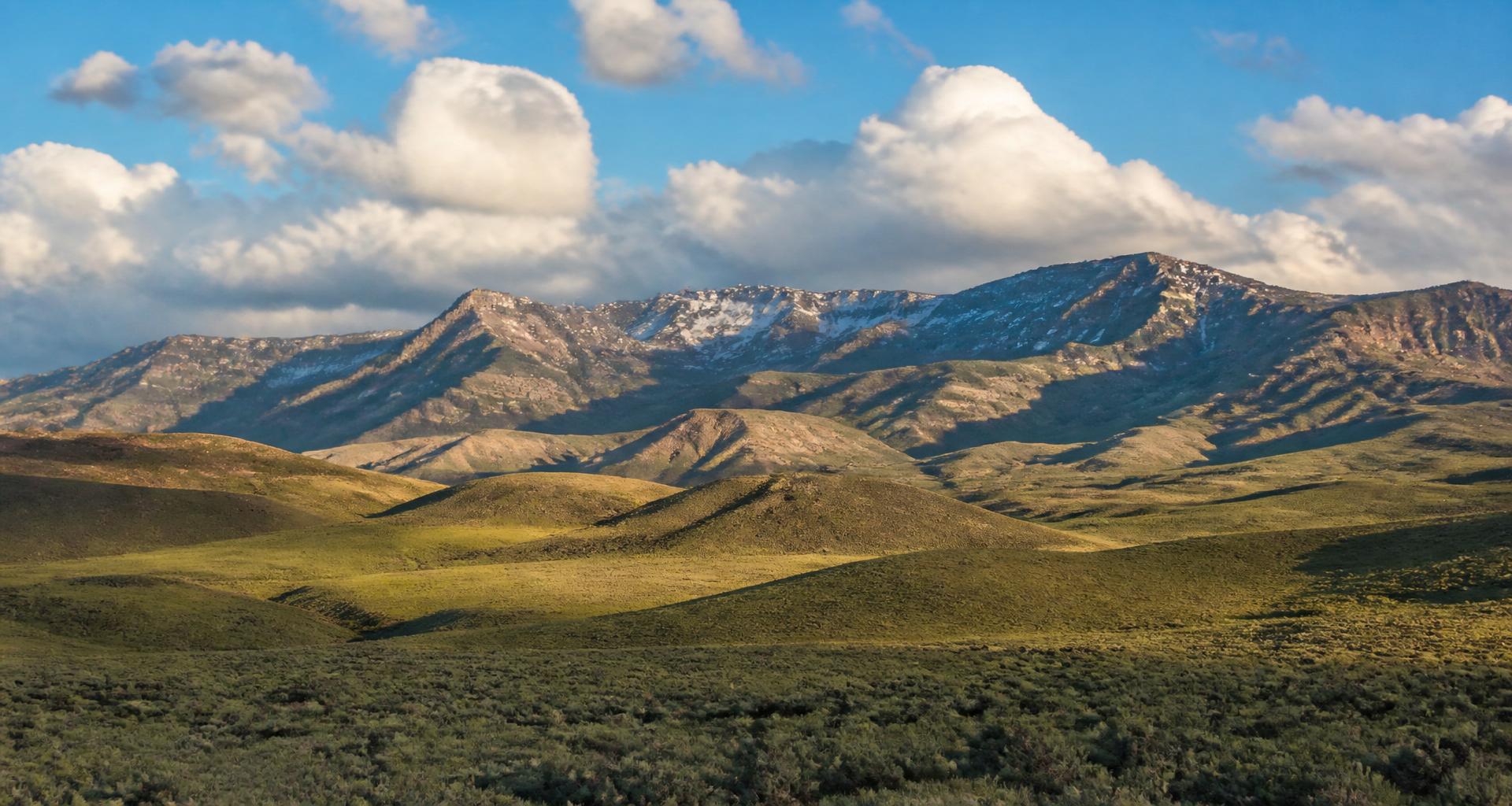
We live in north central Wyoming, where winter conditions, extended drought, and predator pressure all influence how we manage our flock. During the winter months, our ewes can be found out on pasture or in a dry lot being fed forages. In years with severe drought, a dry lot also allows us to rest our pastures rather than overgraze them. Protecting the land is just as important as caring for the sheep, and sometimes removing livestock from pasture is the best decision for both.
Lambing is another example. Keeping ewes close to the house during lambing allows us to reduce losses from predators. Golden eagles are one of the primary predators of young lambs in our area, and our part of Johnson County is recognized as one of the United State's highest-risk areas for golden eagle sheep predation. By lambing closer to the house, we can provide additional supervision during the most vulnerable stage of a lamb's life.
Once ewes have lambed and the lambs are strong enough to travel, they are moved to pasture away from the golden eagles, where they begin learning to graze alongside their mothers. From that point forward, our goal is for lambs to develop in the forage-based environment they are expected to perform in.
Our philosophy has never been about following rigid rules. It's about making practical, responsible management decisions that protect our land, care for our animals, and produce sheep that are well adapted to real-world ranch conditions.
Why Do We Raise Sheep on Pasture?
+
Pasture is more than a place where sheep eat—it's where they learn.
Research by Dr. Fred Provenza and colleagues at Utah State University has shown that lambs learn many of their lifelong behaviors from their mothers. As they follow their ewe across the landscape, they learn which plants are nutritious, which ones to avoid, where to find water, how to travel across rough country, and how to efficiently use the resources available in their environment.
These lessons can't be fully taught in a feedlot or dry lot. They are learned one bite, one pasture, and one day at a time alongside experienced ewes. This early learning helps shape the way sheep forage, adapt to changing conditions, and interact with the landscape throughout their lives.
At Western Skies, we believe raising lambs on pasture develops more than just healthy sheep—it develops knowledgeable sheep. By allowing lambs to learn from experienced mothers in a forage-based environment, we're building a flock that understands how to efficiently harvest forage, navigate large pastures, and thrive under practical ranch conditions.
Good genetics are the foundation, but experience matters too. We believe the best sheep are those that inherit both strong genetics and the knowledge to use them well.
What is your Parasite Management?
+
Parasite management looks very different in Wyoming than it does in many other parts of the United States.
Our semi-arid climate naturally limits the survival and transmission of many internal parasites that thrive in warm, humid environments. While no sheep operation is completely free of parasite risk, Wyoming producers generally experience lower parasite pressure than flocks managed on irrigated pastures or in more humid regions. One of the more common parasites we encounter is the sheep bot fly (nasal bots), which is well recognized throughout the Intermountain West.
Because of this, our parasite management philosophy emphasizes biosecurity and selection rather than routine deworming. As we continue moving toward a closed flock, we expect our reliance on dewormers to become even more limited by reducing the introduction of outside animals and the parasite challenges they can bring.
The highest-risk animals in our program are those entering the flock from other operations, particularly recipient ewes or sheep originating from different regions of the United States. New arrivals follow a biosecurity protocol that may include deworming and other health measures before they are integrated into our flock. Our goal is to prevent introducing parasite species or dewormer-resistant worms that are not already present on our ranch.
Once sheep have entered our program, we rely on observation and selective treatment rather than routine whole-flock deworming.
Our breeding philosophy is equally important. We are not interested in maintaining sheep that require continual intervention to remain productive. If an individual repeatedly shows signs of poor parasite tolerance or requires excessive treatment to stay healthy under our management system, it will not remain in the breeding program.
Do you ship?
+
Yes. We coordinate nationwide shipping for live animals and are happy to work with the buyer's preferred livestock transporter. We also offer transportation through our sister company, Western Crossroads Trucking LLC, which brings more than 15 years of experience hauling livestock safely and professionally across the United States. Whether you arrange your own transportation or choose ours, we'll work closely with you to ensure your sheep arrive safely and with as little stress as possible.
Are your sheep registered?
+
Yes. At Western Skies Australian Whites, we believe preserving the integrity of the breed is just as important as improving it.
That's why we register our sheep with the American Australian White Sheep Breeders Association (AAWSBA). The association is dedicated to preserving the Australian White as it was developed in Australia while supporting the responsible growth of the breed in the United States. We share that philosophy.
Our breeding program is built on Tattykeel genetics, the original developers of the Australian White breed, and our goal is to honor that foundation while thoughtfully selecting sheep that excel in American forage-based production systems.
We believe the AAWSBA is committed to the long-term success and integrity of the Australian White breed in the United States. As our own program grows, we look forward to growing alongside the association, supporting its mission, and contributing to the future of the breed for generations to come.
Registration provides more than a certificate—it provides documented pedigrees, verified ancestry, and confidence that every registered animal can be traced through recognized Australian White bloodlines. Combined with DNA verification and accurate identification, it gives our customers confidence in the genetics they are investing in.
We understand that buyers may have different registration preferences. If a buyer chooses to transfer an animal to another registry after purchase, we are happy to assist by providing the documentation and records available from our program. However, any fees, DNA testing, inspections, or other expenses required by another registry are the responsibility of the buyer.
For us, registration is about accountability, transparency, and preserving the future of the Australian White breed.
Can Canadian buyers purchase Australian White rams from us?
+
Yes. Western Skies Australian Whites can sell qualifying breeding rams to Canadian buyers.
Canada provides a specific import pathway for U.S. rams based on the individual ram's scrapie-resistant genotype. This means our flock does not have to complete the five-year USDA Scrapie Flock Certification Program (SFCP) Export Category waiting period in order for an eligible ram to be exported to Canada.
There is still an import/export process that must be completed before the ram crosses the Canadian border. We are happy to work with Canadian buyers, our USDA-accredited veterinarian, and the appropriate government agencies to help make the process as straightforward as possible.
What Makes a Ram Eligible for Export to Canada? Under current Canadian import requirements, a ram may be imported from a U.S. flock of any SFCP status if genotype testing determines that he has one of the following scrapie-resistant genotypes: 136AA / 171RR, or 136AA / 171QR. A ram that does not have one of these two qualifying genotypes cannot use this particular genotype-based Canadian import pathway.
Scrapie genotyping determines genetic susceptibility to classical scrapie; it is not a test to determine whether an animal currently has scrapie.
How Is the Ram Genotyped? Canadian authorities require official genotype documentation. This is more specific than simply having a DNA or parentage test performed on the ram. The genotype sample must be collected by a USDA-accredited veterinarian. At the time the sample is collected, the ram must have permanent official identification, and that official identification must be associated with the genotype sample and laboratory report.
The sample must be tested by a laboratory that is approved by USDA for official scrapie genotype testing. The resulting documentation must include the ram's permanent official identification, his genotype at codons 136 and 171, the complete name and address of the USDA-approved laboratory, and the name of the USDA-accredited veterinarian who collected and submitted the sample.
For Canadian eligibility under this pathway, the result must be 136AA/171RR or 136AA/171QR. Because laboratory approvals can change, Western Skies will verify that the laboratory is currently USDA-approved before samples intended for Canadian export eligibility are submitted.
Does Western Skies Have to Be in the Five-Year Scrapie Export Program? No, not for a qualifying ram using the genotype pathway. Canada normally uses flock scrapie-certification status for importing breeding sheep, particularly females. However, Canada provides a separate option specifically for male sheep. A ram with a qualifying 136AA/171RR or 136AA/171QR genotype may be imported from a U.S. flock regardless of the flock's SFCP status, provided all other Canadian import requirements are satisfied.
This is why Canadian export availability may be offered on qualifying Western Skies rams even though our female sheep may not qualify for export under the same rules.
Does the Canadian Buyer Need an Import Permit? Yes. An import permit from the Canadian Food Inspection Agency (CFIA) is required before the ram arrives at the Canadian border. The Canadian buyer/importer is responsible for obtaining the import permit. The genotype documentation for the ram must be submitted as part of the Canadian import-permit process. The permit must be issued before the animal arrives at the port of entry.
We will provide the buyer with the information and documentation we have for the ram so the buyer can complete the permit application. The CFIA import permit number must ultimately appear on the ram's export health certificate.
Does the Ram Need Additional Disease Testing? Under Canada's current U.S. import policy for sheep, there are no routine additional disease tests listed for this breeding-animal import category. However, this does not mean that a ram can simply cross the border with his genotype report. He must still meet Canada's general animal-health certification requirements, and temporary disease restrictions can be imposed because of outbreaks in particular states or regions.
Requirements can change between the time a ram is purchased and the date he is exported. For that reason, Western Skies and the buyer will verify the current USDA and CFIA requirements before shipment.
Does the Ram Need a Health Certificate? Yes. The ram must travel with the required U.S. export health documentation. The animal and his flock of origin must be inspected by a veterinarian within 30 days before importation into Canada and found free from communicable disease. The veterinarian must also certify, to the best of their knowledge and belief, that the animal was not exposed to a communicable disease during the 60 days preceding the inspection.
The export certificate must clearly identify the individual ram and include the required information, including his qualifying genotype. The certificate is completed by an authorized/USDA-accredited veterinarian as applicable and must receive the required official U.S. government endorsement.
What Identification Does the Ram Need? Every ram entering Canada must have permanent individual identification that allows him to be traced back to his flock of origin. Canada recognizes several forms of qualifying identification, including certain official USDA tags and qualifying 840 RFID tags.
If an eligible U.S. 840 tag is used, Canada states that the sheep does not have to be re-tagged with a Canadian 124 tag after arrival, although the Canadian importer must still complete the applicable traceability reporting.
Does the Ram Need a USA Tattoo? Yes, under the current Canadian requirements. In addition to the permanent individual identification, the sheep must have a legible permanent 'USA' tattoo. The letters must be at least 1 centimetre high. For sheep, Canada specifies that the tattoo is normally placed in the right ear. If there is insufficient ear available, the current rules provide alternate locations such as the inner right flank or tail web. This requirement is separate from the ram's regular farm identification and official individual identification.
What Happens Between the Health Inspection and Export? Animals being prepared for Canadian export must be protected from exposure to animals, products or equipment of lesser or unknown health status during the period between required testing/certification and export. No new animals should be added to the export group unless those animals have sanitary guarantees comparable to the rest of the group. For that reason, once a ram enters the final export process, additional biosecurity and separation requirements may apply until he leaves for Canada.
What Happens at the Canadian Border? The shipment must be presented at an appropriate Canadian port of entry. The required documentation must be presented to a CFIA veterinary inspector at the first point of entry, and the animals themselves must also be presented for inspection. Prior arrangements must be made so that CFIA veterinary inspection is available at the appropriate time. The buyer and transporter should therefore coordinate the crossing location and timing before leaving for the border rather than simply arriving at a border crossing with the ram.
Who Is Responsible for the Canadian Import Permit? The Canadian buyer/importer is responsible for obtaining the Canadian import permit and satisfying Canadian importer requirements. Western Skies will be responsible for providing the appropriate information about the animal and working on the U.S. side to obtain the required genotype documentation, identification, veterinary examination and export documentation. Both parties must cooperate because the Canadian permit and U.S. export certificate contain information that must match.
Who Is Responsible for Transportation? Transportation arrangements will be determined for each sale. Canadian buyers may use an appropriate livestock transporter, arrange transportation themselves when legally permitted, or contact us regarding available transportation options. International livestock transportation requires additional planning because the animal must enter Canada through an appropriate port and CFIA veterinary inspection must be arranged.
Transportation costs, veterinary costs, government fees, import fees, border inspection costs and other expenses associated with export are not included in the purchase price unless specifically stated in the sale agreement.
Can I Bid on or Purchase a Ram Before the Import Permit Is Issued? Yes, a Canadian buyer may purchase or place a bid on an available ram before all export paperwork is complete. However, purchase of a ram does not guarantee that Canadian authorities will ultimately approve importation. Any sale intended for Canadian export is subject to the ram meeting the applicable genotype, identification, health and export requirements and the Canadian buyer obtaining the necessary CFIA import permit. We recommend that Canadian buyers contact us before bidding or purchasing so we know that the animal is intended for export and can verify his genotype/export status.
What If a Ram Has Not Been Genotyped Yet? Some young rams may be offered for sale before official Canadian-export genotype testing has been completed. If a Canadian buyer is interested in one of these animals, please contact us before bidding or purchasing. The ram can be officially identified and sampled by our USDA-accredited veterinarian. He will only qualify for Canada's genotype-based ram import pathway if the official result is 136AA/171RR or 136AA/171QR. A ram should not be considered Canadian-export eligible until the qualifying result has been received and the remaining import/export requirements are satisfied.
Are Ewes Available for Export to Canada? Canadian requirements for breeding females are substantially different. The individual genotype pathway described above applies specifically to qualifying rams. A ewe cannot simply be genotype tested as 136AA/171RR and automatically qualify under the same U.S.-to-Canada import option. Canada currently requires breeding females using the standard pathway to originate from a U.S. premises meeting its negligible-risk scrapie requirements, generally involving a minimum of five years in the USDA SFCP Export Category.
For this reason, any current statement on our website that an animal may be eligible for Canadian export applies specifically to qualifying rams unless otherwise stated.
Important Notice for Canadian Buyers: International animal-health and import requirements can change because of disease outbreaks, changes in government policy, or restrictions involving particular states, provinces or transportation routes. Therefore, 'Canadian Export Eligible' means that a ram meets or is expected to meet the applicable genotype pathway; it is not a guarantee of admission into Canada. Final eligibility is determined by the applicable U.S. and Canadian government authorities at the time of export.
Canadian buyers should contact Western Skies Australian Whites before bidding or purchasing an animal intended for export. We will work with the buyer to verify current requirements and coordinate the U.S. documentation needed for the export process.
What Does DNA Verification Really Mean for Our Australian White Genetics?
+
We believe in being transparent about what DNA verification can—and cannot—tell us.
Australian White genetics in the United States originated from imported Tattykeel embryos and semen. For the imported genetics, DNA samples from both parents—particularly the donor ewes—were not collected or are not available for parentage verification.
Our program is built on recent Tattykeel genetics. In spring 2026, we purchased embryos directly from Tattykeel as part of that year’s U.S. shipment. We have also purchased breeding stock produced from Tattykeel embryos imported into the United States in 2021 and 2023. The limitation is not the age or source of these genetics, but the DNA records available behind some of the imported embryos. Where DNA was not collected or made available on the original donor animals, we cannot recreate that verification after the fact. We are starting with the documented Tattykeel genetics available to us and building a stronger DNA and parentage record with each generation we produce.
Ultimately, any registry or DNA system also depends on accurate identification, recordkeeping, and honest submission of samples. DNA is an excellent tool, but it does not replace breeder integrity.
At Western Skies Australian Whites, our goal is to create the strongest paper trail possible going forward. We will DNA parent-verify our registered animals, maintain careful identification and breeding records, and clearly disclose where historical DNA verification is unavailable.
We can’t change what was or wasn’t collected before these genetics reached us. What we can do is be transparent about it and build a more thoroughly documented flock from here forward.
How do we ensure the animal you purchase is the animal we say it is?
+
At Western Skies Australian Whites LLC, we prioritize accurate identification, documentation, and transparency. All animals are double tagged so that if one tag is ever lost, a second form of identification remains in place. This helps ensure each animal can be accurately tracked throughout its lifetime.
All registered animals in our program are DNA verified, providing additional confidence in parentage and pedigree accuracy.
We stand behind our genetics and our records. If a buyer has questions regarding parentage or would like additional verification before purchase, we welcome independent genetic testing and third-party evaluations. While our required testing is already completed, buyers are welcome to submit their own DNA sample or arrange a pre-purchase examination with a veterinarian of their choice.
Our goal is simple: provide buyers with confidence, transparency, and accurate information when investing in Western Skies Australian White genetics.
Why does Western Skies emphasize epigenetics?
+
Genetics determine what an animal can become. Epigenetics is the study of how an animal's environment influences how those genes are expressed.
In simple terms, two sheep may have very similar genetics, but how they're developed — their nutrition, stress, health, and overall environment — can influence how much of that genetic potential they achieve throughout their lives.
Research has shown that the environment experienced by a ewe during pregnancy, as well as the conditions a lamb is raised under, can influence epigenetic expression. In some cases, these effects may extend beyond the individual animal and influence its offspring, and even in the following generations. While an animal's DNA does not change, the way certain genes are expressed can.
At Western Skies, we believe the environment is one of the most valuable selection tools available. Developing sheep in a forage-based system helps reveal the animals that are naturally efficient, fertile, resilient, and well suited for American forage production systems. We prefer to let the environment identify the sheep that truly excel.
Our philosophy is simple: we use a forage-based environment not to change the genetics, but to reveal them. By combining strong Tattykeel genetics with thoughtful management and selection here in the USA, our goal is to develop Australian White sheep that are adapted to thrive in American grass-based production systems for generations to come.